St George’s Hall: listen to the whole ensemble
St George’s Hall is a Bradford city-centre concert hall with a programme spanning music and other live entertainment. Bradford Theatres describes its annual classical season alongside a broader range of events. Check the individual listing to establish whether the performance includes singers, an instrumental ensemble or another format before booking.
For a singing student, an ensemble performance can be a useful opportunity to hear how musicians share attention. Notice how a soloist begins after an instrumental passage, or how a group settles a final chord together. The useful lesson is often about listening and coordination rather than simply producing the loudest or longest note.
The Alhambra: storytelling through song
The Alhambra Theatre presents musicals alongside drama, dance and other productions. Its official page provides show listings and visitor information. If musical theatre interests you, choose a production whose subject and age guidance suit your group, and read the synopsis before attending if that helps you follow the story.
Listen for how a performer’s intention changes from one song to the next. A quiet line can communicate as much as an energetic chorus when it arrives at the right moment. Watch the connection between dialogue and singing, and the way a performer responds while someone else has the main musical line. These observations can support interpretation in your own repertoire.
Bradford Live: check the event format
Bradford Live directs visitors to its official Trafalgar Tickets pages for the current programme and information about a visit. It offers another route into live music in the city. Read the details of your particular event, including seating or standing arrangements, age restrictions, entry times and access information, rather than assuming all shows use the same format.
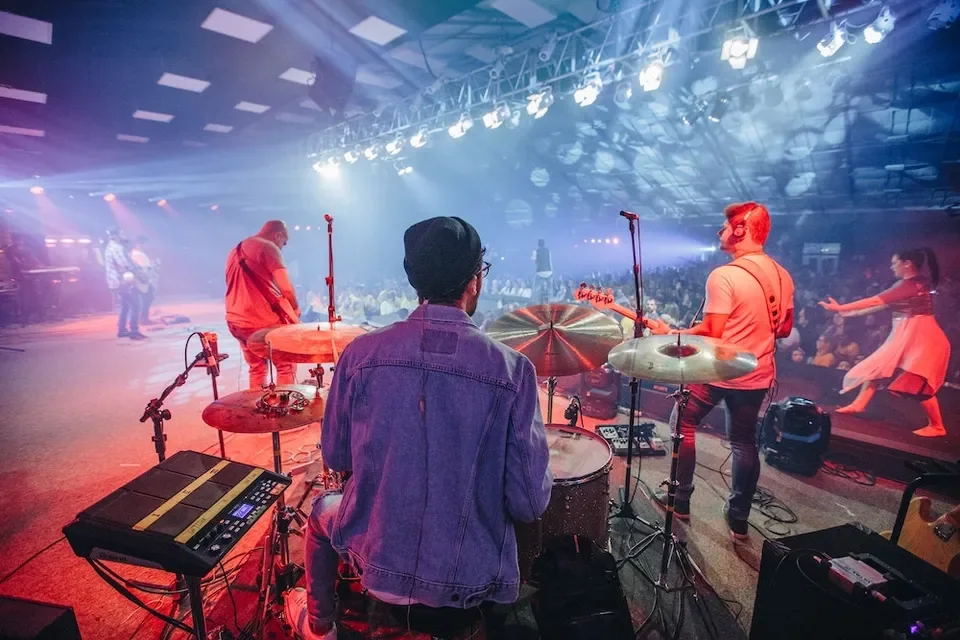
At a larger amplified performance, notice how the singer works with the band and the space. Brief spoken introductions, pauses and the order of songs all contribute to the experience. You can learn from those choices without trying to reproduce the production scale or equipment of a touring show at your first informal performance.
Choose a performance for your interests
Start with the music that makes you curious. A familiar style can help you hear details you had previously missed, while a different genre can reveal another approach to phrasing or presenting a song. You do not need to attend an expensive headline performance to develop your listening. Compare the available programmes and decide what fits your budget and travel arrangements.
If you are bringing a child, check the event’s age policy and likely length directly. Ask the venue about seating, access or other requirements before purchasing if the information is unclear. A comfortable visit allows everyone to concentrate on the music, rather than worrying about practical arrangements that could have been settled in advance.
Listen for one detail at a time
Trying to analyse everything at once can make a concert exhausting. Pick one question: where does the singer leave silence, which words receive emphasis, or how does the final chorus differ from the first? Let the rest of the performance happen naturally. Afterwards, write a few sentences describing an example that stayed with you.
Use ordinary words before technical labels. Saying that a phrase sounded conversational, restrained or urgent can be a useful start. If you cannot explain how the effect was achieved, bring the observation to a lesson. You can investigate a musical idea without assuming that you can see or hear every part of a professional performer’s technique from the audience.
Watch collaboration, not just the lead singer
Accompanists, backing singers and other band members make decisions that shape the lead performance. Watch for small cues before an entrance and for the way musicians recover if a moment changes. An apparent pause may be a planned part of an arrangement. Listening across the group is particularly useful if you hope to sing with a pianist, choir or band yourself.
During your next rehearsal, try agreeing a starting cue and an ending with your accompanist rather than relying on guesswork. Discuss where you need more time in a phrase. Live music can give you ideas for those conversations, but your arrangement should suit your own group and the amount of rehearsal time you have.
Turn inspiration into manageable practice
After a show, choose one small idea to explore. It could be speaking the words before singing them, varying the emphasis on a repeated line or planning a clear introduction to a song. Avoid turning enthusiasm into a demand to copy an entire professional performance immediately. The original artist’s key, arrangement and sound may not be a useful match for you.
Bring a song title or an official recording to your lesson and explain what interested you. Work on the musical principle rather than an exact impersonation. A successful result might be a clearer story or a more confident entrance in your existing repertoire, even if it sounds quite different from the performance that inspired it.
Plan the visit and respect the performance
Use the official venue and ticket links to check current details, including travel, access and any changes to the programme. Allow enough time to arrive and find your place. Follow the venue’s rules about photography and recording; a remembered impression or a note afterwards can be more useful than watching an entire show through a phone screen.
If live performance becomes one of your goals, discuss a realistic next step in your singing lessons in Bradford. That might be singing one prepared song for a small audience or rehearsing with another musician. The venues above are places to explore as a listener, not a claim that beginner performance opportunities are available through this website.